For years, the rule was simple: flat burrs meant real money. Conical burrs owned the budget tier, flat burrs started somewhere north of $400, and anyone telling you otherwise was selling something. The DF54 tests that rule directly, and at $229, it mostly wins.
That’s not a small claim. Flat burrs produce a tighter, more uniform particle distribution than conical burrs at the same price point, exactly what espresso needs to build even resistance across the puck. Getting that geometry into a sub-$250 grinder used to mean cutting corners somewhere else. The DF54 cuts corners too. The question is whether it cuts the right ones.
A $229 flat burr grinder isn’t a rounding error anymore. It’s a real category.
📋 Table of Contents
What’s Actually in the Box
Turin’s DF54 ships with a powder-coated aluminum body, a wooden hopper lid, a dosing cup, a rubber portafilter adapter, and a bellow attachment. That last item matters more than it sounds like it should. The hopper alone holds 20 grams. Clip the bellow onto the collar and it climbs to 50 grams. Miss that detail before you unbox it and you’ll assume something’s broken.
The core numbers: 54mm custom stainless steel flat burrs, a 150-watt AC motor spinning at 1,400 RPM, stepless grind adjustment via a chrome-wrapped dial with a metal indicator, and a body that weighs 4.7 kilograms on its own, dense enough to sit still on the counter mid-grind instead of walking across it.
The Burr Set: Why Flat Matters Here
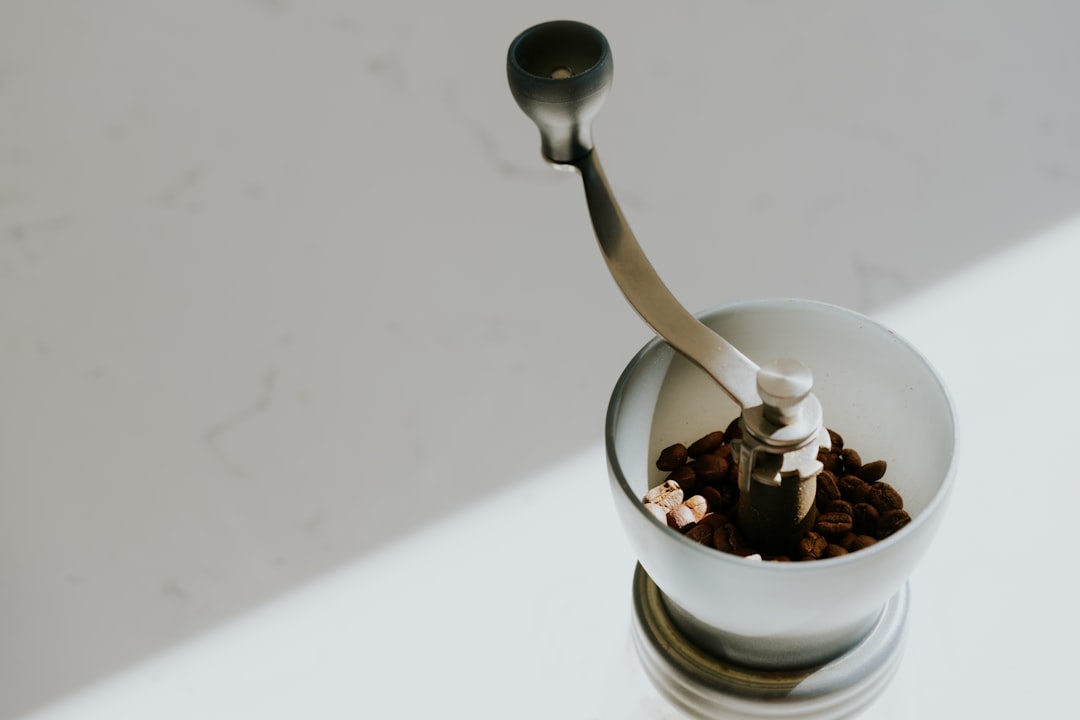
Conical burrs, the default at this price for years, produce a bimodal particle distribution: a main cluster of target-size grounds plus a long tail of fines. For pour-over, that tail is a liability; it over-extracts and turns a clean cup muddy. For espresso it’s more forgiving, sometimes even useful, but it’s still less controllable than what flat geometry delivers.
Flat burrs cut differently. Two parallel discs shear the bean between them instead of crushing it against a cone, producing a tighter, closer-to-unimodal spread. Less variance in particle size means more even resistance through the puck, which means less channeling and a shot that actually reflects the dial-in you did rather than the luck of the grind.
That’s the pitch behind every flat-burr grinder from the Niche Zero on down. The DF54’s contribution isn’t a new idea — it’s making a real version of that idea available at a price where conical burrs used to be the only option.
Retention and Static: Checking the Claims
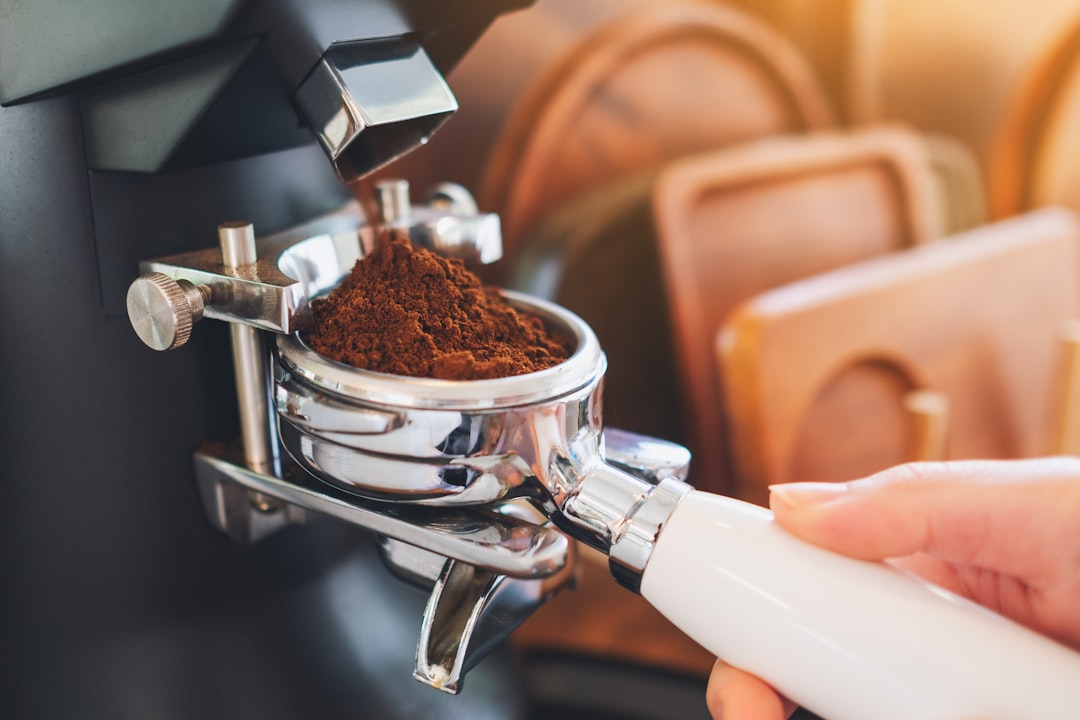
Turin’s own spec page for the DF54 states “true zero retention: less than 0.1 gram,” backed by a plasma generator, an ionizer mounted near the exit chute that neutralizes the static charge grounds pick up as they’re cut. Static is what makes grounds cling to chute walls and clump instead of falling cleanly into your portafilter or dosing cup; kill the charge and you kill most of the clinging.
Independent testing from Coffeeness’s DF54 review backs the broad claim, describing “a lovely, neat stream of coffee” from the chute and calling the retention “almost zero” in practice. That’s the same ballpark the Niche Zero built its reputation on, and it’s not something budget grinders reliably delivered even two years ago. Most either skipped anti-static measures entirely or bolted one on as an afterthought that barely worked.
Zero retention used to cost $500. Now it’s a $229 line item. It’s still not magic — a small amount of static and clumping shows up occasionally, especially with oilier dark roasts, and the ionizer doesn’t fully match the DF64 II’s more powerful setup. But for the price, it’s a genuine feature, not a marketing footnote.
Dialing In: What Espresso Testing Looks Like
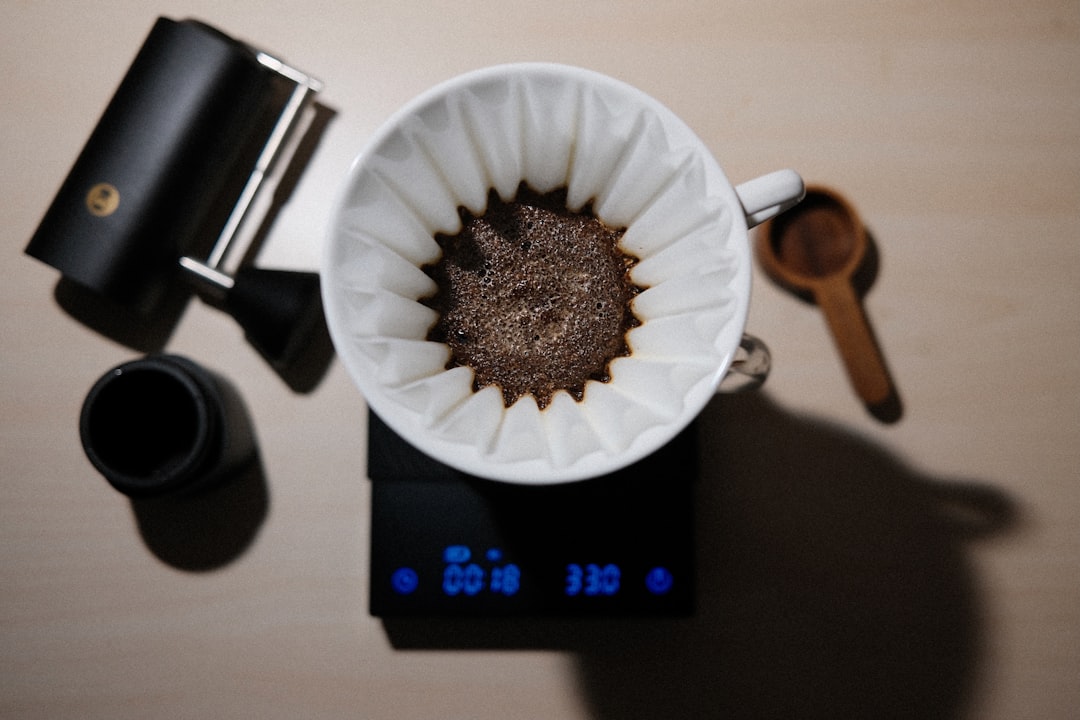
Run Bob and Weave Dark Blend through it at a standard 18g-in, 36g-out espresso ratio, and the DF54 lands shots inside the 27-32 second window without a fight once you’ve found the right point on the stepless dial. There are no numbered clicks, so expect to spend your first few doses hunting rather than dialing to a remembered setting. Body comes through syrupy rather than thin, and channeling is rare at a reasonable dose, consistent with the flat burr’s tighter particle spread.
Push it toward a lighter, denser bean like Ethiopian Jab and the story gets more honest. The grind still produces a usable shot, but it takes more fine-tuning to avoid sourness, and the 150-watt motor audibly works harder against denser beans than it does against a medium-dark blend. It gets there. It just doesn’t get there as effortlessly as a grinder with double the wattage.
Where It Loses: The Honest Trade-Offs
No review of a $229 grinder is honest if it pretends there’s no compromise.
The motor is modest. 150 watts at 1,400 RPM is enough for single-dose espresso, but it’s noticeably slower than the DF64 II’s 250-watt motor, and it strains more on dense or oily beans. If you’re grinding three shots back to back for a morning with guests, you’ll feel the difference in both speed and consistency.
The hopper capacity is a trap for first-time buyers. 20 grams bare is genuinely small, smaller than most people expect from a grinder that isn’t marketed as a travel unit. The bellow fixes it, but it’s an extra step that isn’t obvious from the spec sheet alone.
And it’s still a step below its own sibling. The DF64 II exists specifically because 54mm burrs and a 150W motor have a ceiling. If your budget stretches to $399, that ceiling is real and worth paying to avoid.
DF54 vs. Fellow Opus vs. DF64 II: Picking Your Weight Class
Three grinders are circling the same buyer here, each built for a different job.
Fellow Opus ($199) is the generalist. It handles filter, French press, and espresso reasonably well, which we cover in full in our Fellow Opus review. It’s the right call if espresso is one of several brew methods you rotate through, not the only one.
DF54 ($229-260) is the espresso specialist at this price tier. It gives up filter versatility for a flat burr set and near-zero retention tuned specifically for pulling shots. If espresso is the job, this is the tool built for the job.
DF64 II (about $399) is what you buy once the DF54’s ceiling starts showing: 64mm burrs, a 250W motor, and the extra headroom our Niche Zero vs. DF64 Gen 2 comparison already covers in the context of the DF64’s older sibling grinder.
If you’re weighing an entry-level grinder purchase against your whole setup rather than just this one box, our home coffee upgrade ladder walks through where a grinder like this should actually sit in your spending order. It isn’t last.
Who Should Buy It
Buy the DF54 if you’re getting a first real espresso setup going and don’t want to compromise on burr geometry just because your budget stops at $250. It’s also a reasonable single-dose entry point if you’ve been running an all-purpose grinder like a Baratza Encore ESP or the earlier Fellow Ode, both covered in our entry-level grinder comparison, and are ready to specialize.
Skip it if you already own a DF64 II, a Niche Zero, or anything in that tier; the upgrade from the DF54 to those grinders is real, but the reverse move doesn’t make sense. Skip it too if filter coffee is your primary method. That’s a different fight, and a different grinder wins it.
The Closing Bell
The DF54 doesn’t reinvent anything. It takes an idea proven at $500-plus (flat burrs, single-dose workflow, near-zero retention) and gets it down to $229 without gutting the parts that actually matter to your shot. The motor is slower than its bigger sibling’s. The bare hopper is smaller than it should be. Neither of those is a dealbreaker for the person this grinder is actually built for.
If you’ve been putting off a real espresso grinder because the flat-burr entry price felt out of reach, that excuse is gone. Weigh your dose, clip on the bellow, and find out what your shots have been missing.