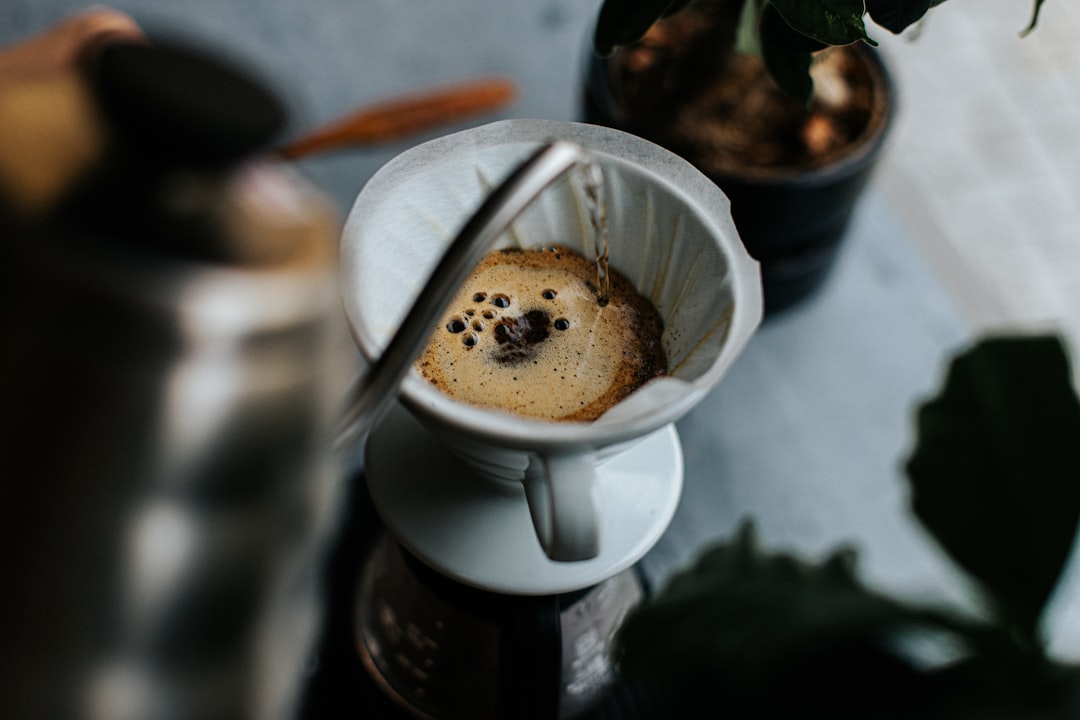
Every pour-over guide, including ours, eventually says some version of “pour slowly, in a tight spiral, don’t disturb the bed.” That instruction is correct, and it’s also the reason most people’s V60 coffee is worse than it should be. A bad pour makes the cup inconsistent, and inconsistency is the real problem: you can live with an average cup, but you can’t plan a morning around a coin flip.
The Hario Switch removes the need to pour during the portion of the brew that benefits least from it. Shut the valve, let the coffee steep undisturbed like a French press, then open the valve and allow the liquid to flow out as a V60 would. You obtain paper-filter clarity without the hand you lack at 6am
The Mechanism: One Valve, Two Brewers
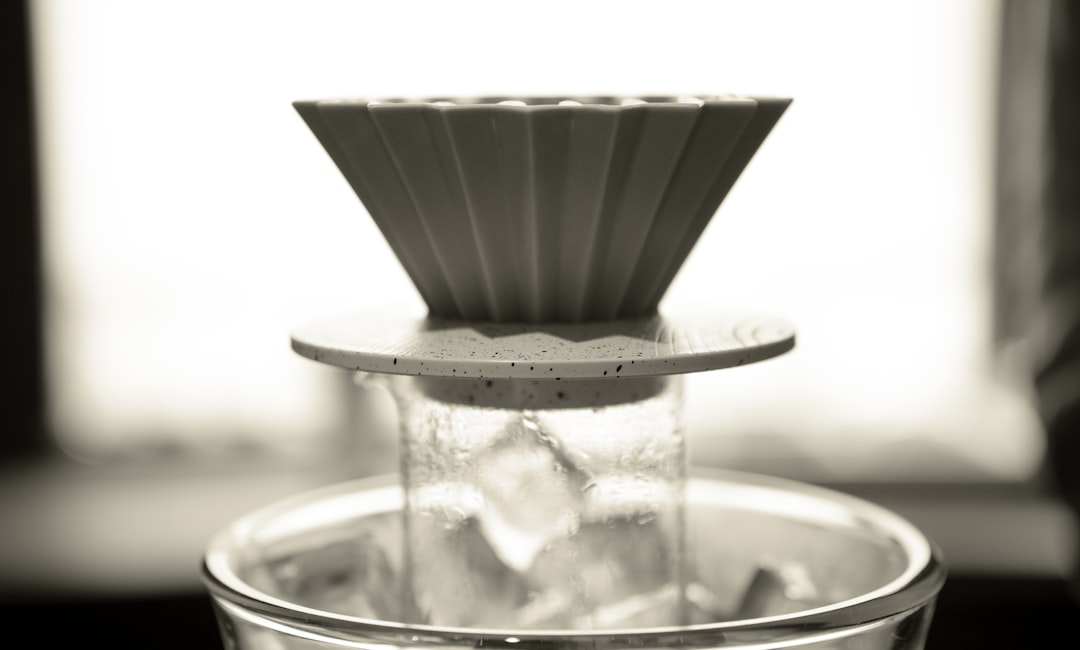
Strip away the branding and the Switch is a V60-shaped glass cone sitting on a silicone base, with a stainless steel ball resting over the drain hole. A plastic switch on the side either pins that ball against the hole, sealing it, or pulls it clear. Closed, water has nowhere to go. The grounds sit fully submerged, steeping the way a French press or Clever Dripper steeps. Open, gravity takes over and it drains through a standard V60 paper filter exactly like a normal pour-over.
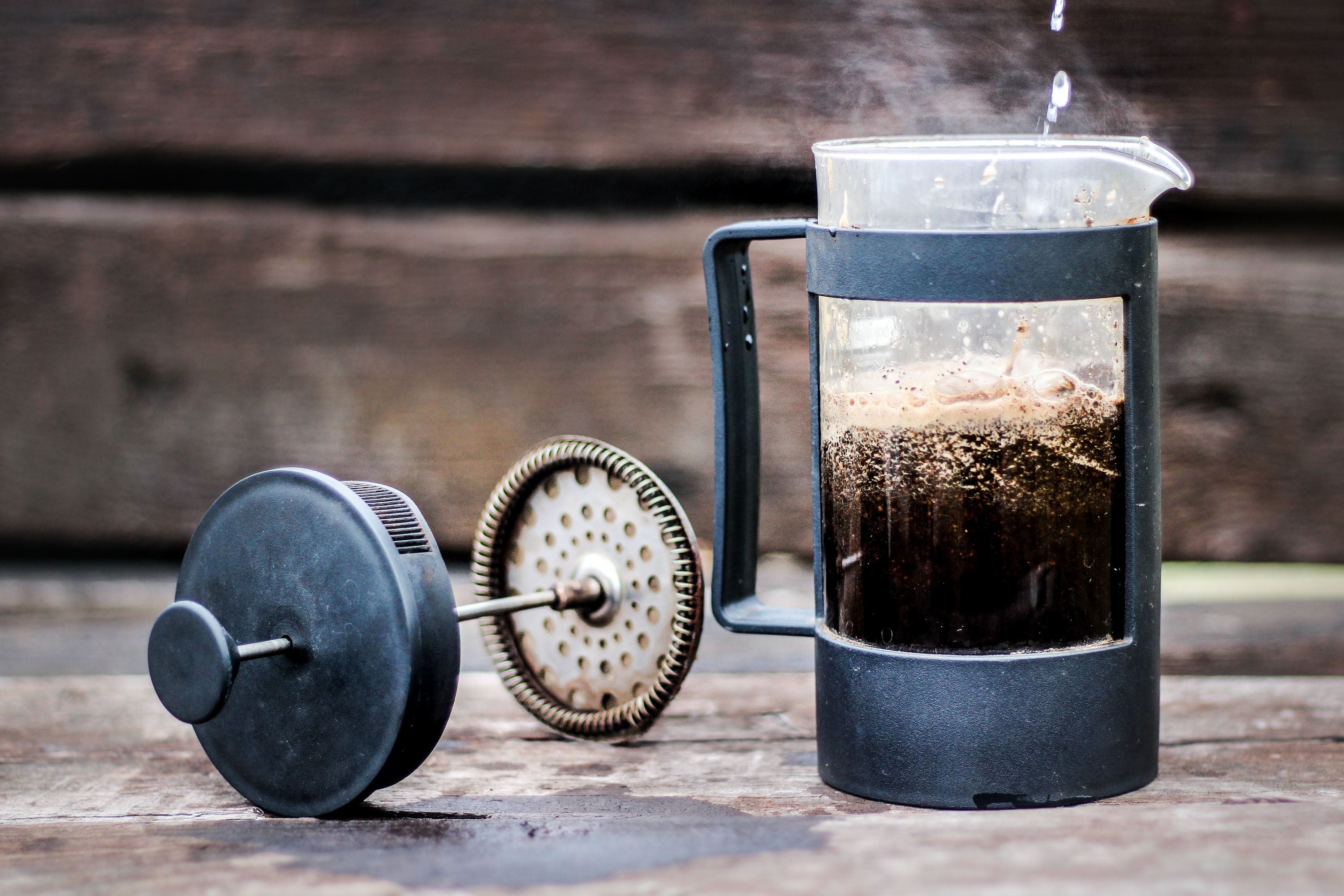
That single mechanical choice solves a problem immersion and percolation each have on their own. Pure immersion (French press, Clever) gives you a round, forgiving cup, but the metal mesh or slow paper drain leaves more fine sediment and less top-end clarity. Pure percolation (V60, Kalita Wave) gives you a clean, bright cup, but only if your pour rate and agitation stay consistent from first drop to last, and waver even slightly and you get channeling, where water finds an easy path through the bed and leaves the rest under-extracted, the same fault line we mapped out in our breakdown of grind fines and channeling. The Switch runs both phases in the same brew: steep first for the evenness and body, then open the valve and let a short percolation phase pull the clarity a pure immersion brew can’t reach on its own.
Coffee Chronicler’s 2026 roundup of home brew methods ranked the Switch above the AeroPress for exactly this reason, crediting it with solving “one of pour over’s biggest problems: consistency,” while landing in “a sweet spot between the two” flavor profiles rather than fully committing to either.
Gear Check: What’s Actually in the Box
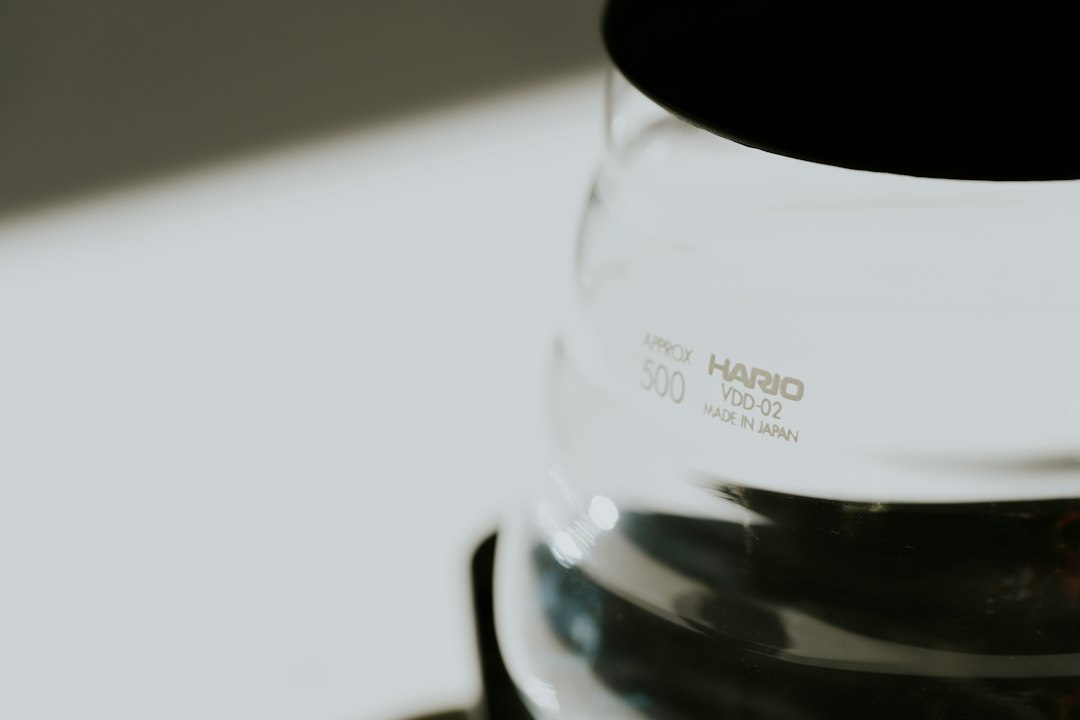
The Dripper: Hario’s own spec page shows two models: the 02 holds 200ml and the 03 holds 360ml. Both are made of heat-resistant borosilicate glass, have a silicone rubber foot, a PCT-resin lever, and a stainless-steel ball that provides the seal. Choose the 02 to fine-tune a single-cup brew; switch to the 03 when you need to serve more than one person.
The Filters: Standard V60 paper filters, tabbed size to match your dripper (40 come in the box). No proprietary filter, no subscription trap.
The Kettle: A gooseneck matters less here than on a straight V60, since the steep phase forgives an uneven pour, but you still want one for the bloom and the final drawdown stage. Our gooseneck kettle knockout covers the two most common picks if you don’t already own one.
The Scale: Mandatory, same as every method on this site. You’re timing a valve flip against a specific water weight, and eyeballing that number is the fastest way to turn a forgiving method back into an unforgiving one.
The Numbers That Matter
| Variable | Target | Why |
|---|---|---|
| Ratio (coffee : water) | 1:16 | Standard pour-over strength; the immersion phase means you can push to 1:15 for a bolder cup without losing clarity |
| Grind | Medium (fine end of table-salt range) | Fine enough for full extraction during the steep, coarse enough that the drawdown doesn’t stall once the valve opens |
| Water Temp | 93-96°C / 200-205°F | Full hot-brew range; the extended contact time doesn’t need scalding water to compensate |
| Bloom | 40-45g water, 30-45 sec | Same rule as any pour-over: skip it and the bed degasses unevenly through the whole steep |
| Valve-Closed Steep | 2:00-2:30 | Long enough to extract like an immersion brew, short enough to avoid the flat, over-steeped flavor of a 12-hour cold brew |
| Valve-Open Drawdown | 60-90 sec | Percolation phase that pulls the clarity a pure steep can’t reach alone |
On the 03: 20g coffee, 320g total water (40g bloom + 280g main pour). The 02 holds 200ml, so scale it down to 12g coffee and 190g water (25g bloom + 165g main pour) rather than trying to fit a 320g brew into it. Every water weight goes into the cone at once while the valve is shut, so the brewer’s capacity is a hard ceiling, not a guideline.
The Protocol: Step by Step
1. Rinse and Preheat, Valve Closed
Rinse the filter to kill papery taste and preheat the glass. Leave the valve shut while the hot water sits, so the glass comes up to temperature, then open it to dump the rinse water and close it again before you dose. Brewing on top of rinse water throws off every weight that follows.
2. Dose and Bloom
Add 20g of medium-ground coffee on the 03 (12g on the 02), then pour 40g of water at 93-96°C (25g on the 02). Give it a light stir to make sure every particle is wet, not just the top layer, and let it sit 30-45 seconds.
3. Fill and Steep
Pour the remaining water up to your 320g total, or 190g on the 02, valve still closed. Set a timer for 2:00-2:30 and leave it alone. This is the whole point of the mechanism: no pouring technique required during the phase that usually punishes bad technique the most.
4. Stir and Settle
At the end of the steep, stir gently, two or three passes, to break up any crust that formed on top and knock loose grounds stuck to the glass. Let it sit 15-20 seconds so the bed settles before you open the valve. This step matters more than almost any other, and it’s the one people skip.
5. Open the Valve
Flip the switch and let the coffee drain. A clean drawdown finishes in 60-90 seconds. If it’s dragging well past that, your grind was too fine for this method; note it and go one step coarser next time.
6. Swirl and Serve
Give the finished coffee a swirl in the server to even out strength, then pour.
Troubleshooting: The Most Common Knockouts
| Symptom | Diagnosis | Fix |
|---|---|---|
| Muddy, gritty cup | Skipped the stir-and-settle step, so loose fines drained straight through | Always stir and pause 15-20 seconds before opening the valve |
| Drawdown won’t finish, or drags past 2 minutes | Grind too fine for the open-valve phase | Go one step coarser; the steep already did the slow-extraction work, so you don’t need a fine grind fighting the drain too |
| Thin, weak cup despite a full steep | Valve opened too early, cutting the immersion phase short | Time the full 2:00-2:30 steep before you touch the switch |
| Bitter, harsh finish | Water too hot for the roast, or steep ran long on a dark roast | Drop to the low end of 93°C for darker beans, or trim the steep toward 2:00 |
| Valve sticking or leaking slightly | Coffee oil buildup on the silicone base or steel ball | Rinse the base and valve mechanism after every brew, the one maintenance step this dripper actually demands |
Switch vs. Clever vs. Straight V60
The Clever Dripper arrived first and remains the most affordable, straightforward immersion device: it’s largely plastic, and a valve pops open the instant you set it on a cup, then snaps shut again once you lift it away. That built-in automation also marks its limit: you cannot keep the valve partially open nor reseal it halfway through a brew, so you cannot divide a single extraction into a steeping period followed by a controlled percolation stage the way the Switch allows.
A straight V60 still wins on raw ceiling. In the hands of someone who’s actually dialed in their pour, a V60 pulls a level of brightness and separation the Switch’s steep phase never quite matches, so you’re trading some of that top-end clarity for a mechanism that doesn’t punish you on the one morning your pour is sloppy. If your V60 game is already tight, the Switch won’t out-brew you. If your V60 cup varies wildly depending on how awake you are, the Switch closes that gap more than any amount of practice will this month.
Two Coffees to Prove It
1. Ethiopian Jab (Light, Washed)
The bag highlights the drawdown stage. An immersion steep brings the blueberry and jasmine flavors forward while preventing channeling loss, and the open-valve ending stops the cup from turning flat and muddy as a straight Clever or French press would on a brew this fragile.
2. Bob and Weave Dark Blend (Dark, Full-Bodied) Run this one closer to the long end of the steep window, a full 2:30 with the valve closed. The extended contact time builds the syrupy body this roast is built for, and the short drawdown at the end keeps it from tipping into the bitter, over-extracted territory a full immersion brew can drift into on a dark roast.
The Closing Bell
A bad pour has ended more good bags of coffee than a bad bean ever has. The Switch spends its steep phase protecting you from that, then hands control back for the drawdown, the one part of the brew where your hands actually help.
Weigh out 20g against 320g of water on the 03, or 12g against 190g on the 02, and run the steep-then-drain protocol above on whatever you’ve got open right now. Compare it against your usual pour tomorrow. Your best cup will taste about the same either way. Your worst cup, the one you rushed on a bad morning, is what actually gets better.
When a brewing manual tells you to pour in a slow, tight spiral, skip it. The valve has already performed that step for you.