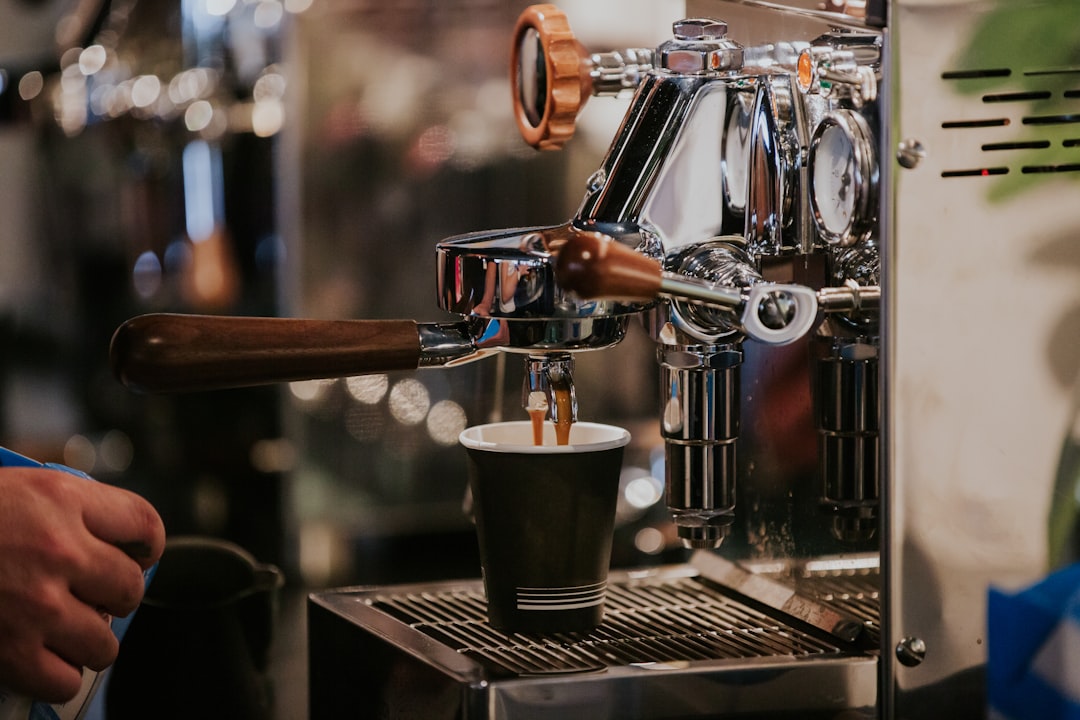
You probably still picture a robot barista as a novelty: a kiosk at an airport terminal, a gimmick that shows up in a “future of coffee” trend piece and then quietly disappears. That picture is out of date. Right now, a robot named Jarvis is pulling shots inside MUJI stores. A Massachusetts startup is racing competitors to put an autonomous kiosk on your street corner. Coffee didn’t need a robot. Running a cafe with people got expensive, unpredictable, and hard to staff. Something had to give.
This isn’t a hypothetical fight anymore. It’s already in the ring.
Automation isn’t coming for coffee. It’s already clocked in. The question worth asking isn’t whether robot baristas are real — they are — it’s what they’re actually good at, what they’re not, and what that split means for the cup you drink tomorrow.
The Contenders Already in the Ring
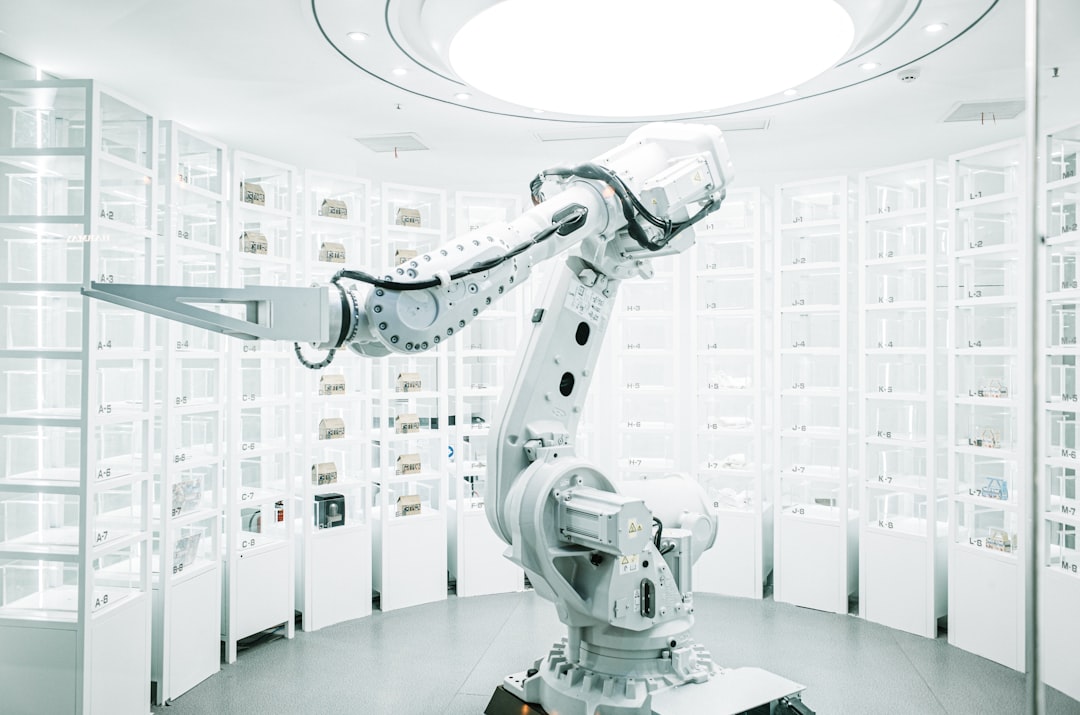
Artly Coffee’s robot barista, a six-axis arm nicknamed Jarvis, has been quietly working a real shift for a while now. It’s currently running drinks out of about a dozen locations across the U.S. and Canada, with several of them tucked inside MUJI retail stores, grinding, pulling, steaming, and handing a finished cup across the counter without a person touching it. Sprudge covered the strangest side effect of that rollout: the point-of-sale screen still asks for a tip, and nobody’s entirely sure what that means when the “barista” doesn’t have rent to pay.
Jarvis isn’t alone. In Massachusetts, a startup called P!ng is building its own autonomous coffee kiosks, and WBUR’s coverage of the local scene framed it plainly as a race, multiple companies chasing the same bet: a machine can get you a decent cup faster than a person can. That’s the real pitch, stated plainly: speed over soul.
Even the competition world has started sweating it. Sprudge ran a piece of speculative fiction this year imagining a barista showing up to a championship stage with a routine written entirely by AI and executed by a robot arm, built to strip out every human variable: the wobble in a pour, the inconsistent tamp, the nerves. It read as satire. It also read like something a lot of working baristas have already thought about at 2 a.m. before a competition.
Why Cafes Are Actually Doing This
Nobody installs a robotic arm because they think it makes better coffee. They install one because running a cafe with humans got hard in ways that compound. Staff call out. Turnover eats training investment before it pays off. A line that’s ten deep at 8:15 a.m. doesn’t care that your best barista is having an off morning.
A machine doesn’t have an off morning. It has the same dial-in at 6 a.m. and at 2 p.m., pour after pour, without needing a break, a raise, or a reason to stay. That consistency is the entire sales pitch: reliability under load, the exact thing that breaks down first in a short-staffed cafe during a rush.
That’s a real cost problem, and specialty coffee has been circling it from other angles for a while. We’ve already written about how pre-batched espresso split cafes into purist and pragmatist camps trying to solve the exact same rush-hour math without a robot arm — pull ahead of time, store it, serve it fast. A robot barista is the same argument taken one step further: instead of pre-batching the drink, you’re pre-batching the barista.
What the Machines Can’t Fake
Here’s where the fight actually gets interesting, because a robot’s strength and its limit come from the same place: it does exactly what it’s told, exactly the same way, every time.
That’s genuinely valuable for dose accuracy, shot timing, and milk temperature: the mechanical parts of a recipe. It is close to useless for the parts of the job that aren’t mechanical. A robot can’t taste a shot going sour mid-service because the grinder burrs need dialing in. It can’t notice that today’s humidity is making the grounds pack differently than yesterday’s and adjust on instinct. It can’t look at a regular’s face and know they need their order changed without being asked, or decide, the way a good barista sometimes does, that a batch just isn’t good enough to serve, full stop, cost be damned.
Matthew Jones, who built one of the earlier robotic coffee kiosks after his own Colorado cafe closed during the pandemic, put it about as honestly as anyone in the business has: with automation, he said, “the human element is taken out of it too often, making it a cold experience.” That’s coming from someone who bet his second act on a machine, not someone rooting against it.
We’ve covered a version of this trade-off before on the roasting side — AI-assisted roasters are already democratizing world-class roast consistency without replacing the roaster’s palate, just freeing it up. Robot baristas are attempting the same move on the service side. The difference is that roasting happens in a back room nobody’s watching. Service happens across a counter, in front of a customer who came in for more than caffeine.
The Specialty Coffee Civil War, Round Two
Sprudge has been openly, publicly skeptical of robot baristas for years — the closest thing the trade press has to an editorial stance against a technology. That skepticism isn’t nostalgia. Specialty coffee built its entire identity on the idea that a person’s attention makes the drink better: the grind adjusted by feel, the pour watched and corrected mid-stream, the “how’s your day” that turns a transaction into a reason a coffee shop is a third place instead of a vending machine with better branding. Automate the person out of that equation and you haven’t just changed how the coffee gets made. You’ve changed what the shop is for.
The counterargument isn’t crazy, though, and it deserves the same honesty we’d give any other trade-off. Consistency at scale isn’t nothing. A tired barista rushing a shot at 8:47 a.m. is also a human element, and it’s not automatically a good one. The real question isn’t “human or machine” as an abstract purity test. It’s which parts of the job actually need a person, and which parts were only ever done by a person because nobody had built the alternative yet.
What This Means for the Cup in Front of You
Coffee, meanwhile, isn’t slowing down as a category. It’s just quietly relocating. The National Coffee Association’s Spring 2026 report found that 66% of U.S. adults drank coffee in the past day, and 85% of those people drank it at home — the highest that figure has been since 2012. Specialty coffee is still growing inside that shift too: 58% of adults had a specialty drink in the past week, up from the previous survey, with espresso-based beverages climbing from 40% to 45% of past-day cups.
Put those two things next to each other and the picture gets clearer. More people are drinking specialty-grade coffee. Fewer of them are necessarily getting it from a person standing across a counter having a conversation with them. A robot barista doesn’t need to win an argument about craft to succeed — it just needs to be standing there when the customer already decided to skip the conversation and wants the drink fast.
The Closing Bell
Robot baristas aren’t going away, and pretending otherwise doesn’t help any cafe compete with one. What actually matters is honesty about the trade you’re making. If a shop automates the pour to survive a labor market that’s genuinely brutal right now, that’s a defensible business decision — as long as it doesn’t get dressed up as a craft upgrade it isn’t.
A machine can hit the same numbers every time. It can’t decide a batch isn’t good enough to serve, and it can’t remember how you take your coffee without being told. That’s still worth paying for, and it’s still worth roasting for — the way we treat every batch of our Colombian Choke Hold and Southpaw Decaf, tasted and adjusted by a person who’ll tell you honestly if a roast came up short. Automation can win the speed round all day. It hasn’t won the fight.