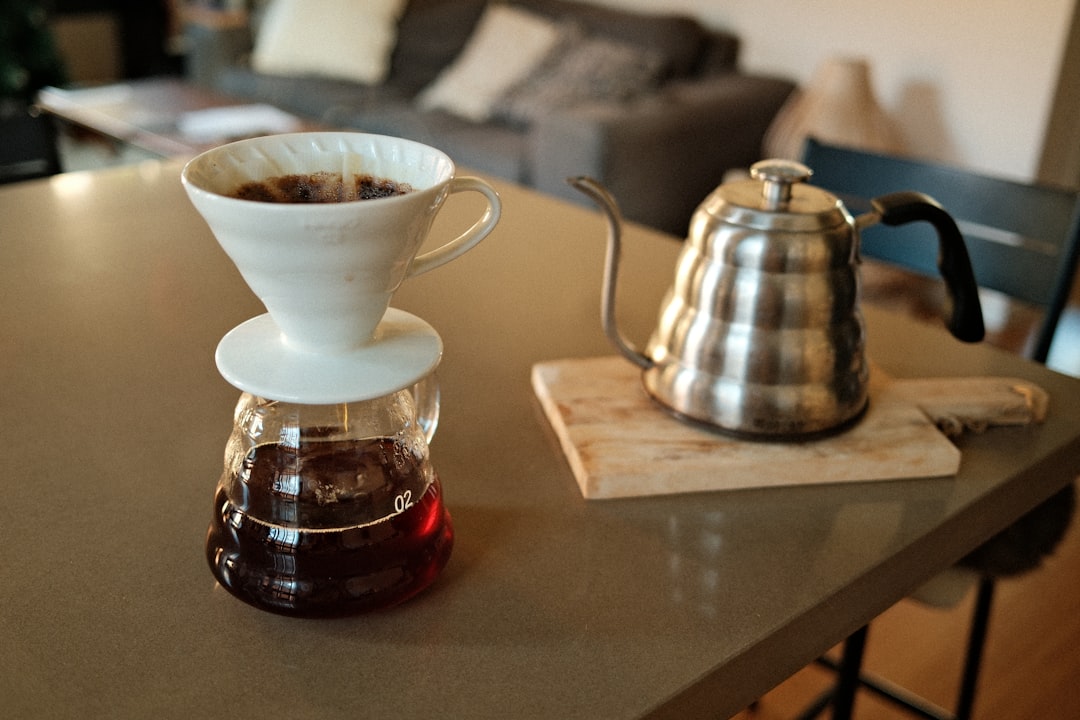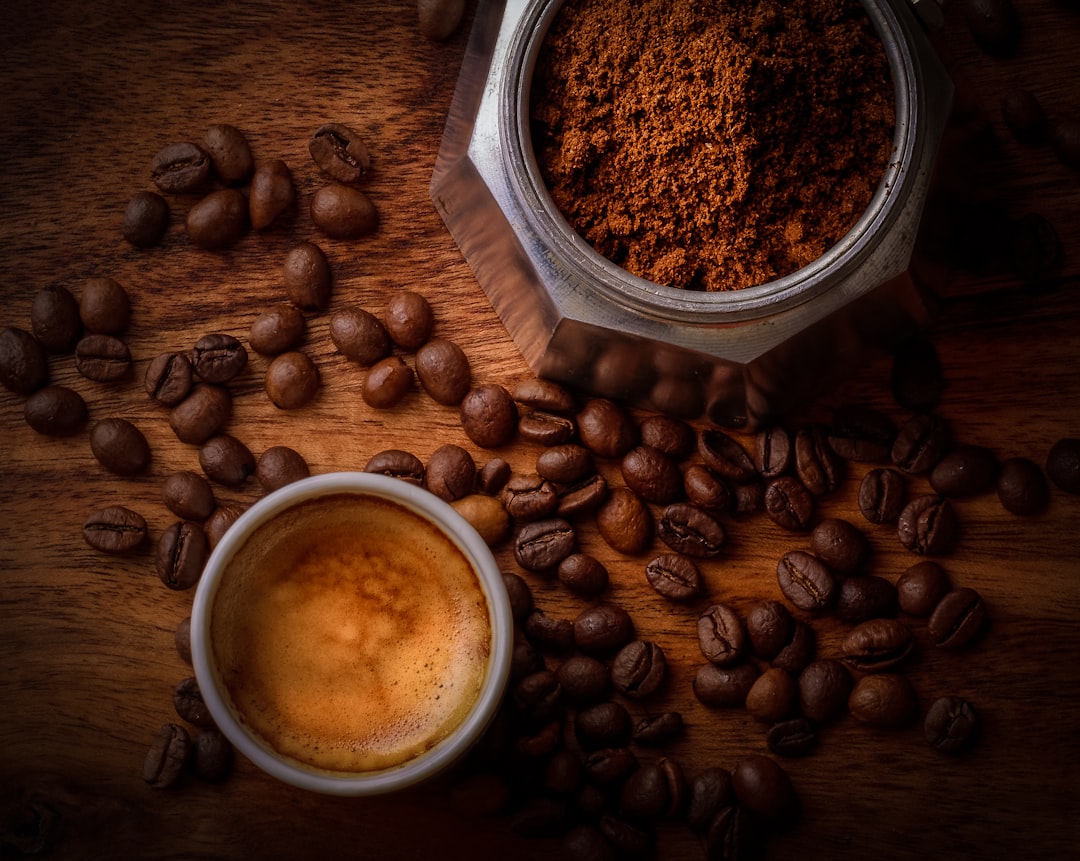

Most people drink coffee on autopilot. Same bean, same grind, same sad routine. They wonder why every cup tastes the same.
Stop. Breathe. Pay attention.
Your hands change the flavor. Not the bean. Not the roast. Not even the water. Your hands.
A groundbreaking sensory study from the University of Oxford’s Crossmodal Research Laboratory just proved it. What you touch before and during brewing — the texture of your cup, the weight of your kettle, the grip of your grinder handle — rewires how your brain perceives taste.
This isn’t woo-woo. This is neuroscience. And it changes everything about how you should approach your morning ritual.
Researchers led by Dr. Charles Spence ran a controlled experiment with 350 participants. Same coffee. Same brew. Different tactile experiences.
Group A held a smooth ceramic cup. Group B held a rough-textured stoneware cup. Group C held a lightweight plastic cup. Group D held a heavy, thick-walled mug.
The results hit like a body shot.
Participants drinking from the heavy ceramic mug rated the coffee as significantly richer, more intense, and more expensive — by margins of 15-23% across every metric. The plastic cup? “Thin.” “Watery.” “Cheap.”
Same liquid. Different vessel. Different perception.
But here’s where it gets wild: the effect started before the first sip. Participants who held the heavy mug while waiting rated the anticipated flavor higher than those holding the light cup. The weight in their hands primed their brain for quality.
Crossmodal Correspondence: Your Brain’s Secret Wiring
This phenomenon has a name: crossmodal correspondence. Your brain doesn’t process senses in isolation. Touch bleeds into taste. Weight bleeds into richness. Texture bleeds into body.
Spence’s lab has documented dozens of these connections:
- Heavy = rich, intense, premium
- Light = thin, weak, cheap
- Rough texture = bold, rustic, intense
- Smooth texture = refined, delicate, clean
- Warmth = sweet, comforting
- Cool = bright, acidic, crisp
- Angular shapes = bitter, intense
- Round shapes = sweet, approachable
Your brain evolved these shortcutts for survival. Heavy fruit = ripe, calorie-dense. Rough skin = thick, protective. Smooth = easy to eat. Angular = potentially dangerous.
Coffee hijacks this ancient wiring. Every tactile cue becomes a flavor prediction.
The Three Touchpoints You Control
You can’t change the bean after it’s roasted. But you control three critical tactile moments every brew:
1. The Grinder Grip
Hand grinders: The resistance, the rhythm, the burr feel — your fingers read the bean density in real time. A Comandante C40’s smooth, buttery rotation vs. a cheap grinder’s gritty stutter. Your hand knows the difference before the coffee hits the brewer.
Electric grinders: The hopper weight. The dosing cup heft. The static cling fight. Even pushing the start button — a satisfying thunk vs. a mushy click — sets expectation.
Action: Invest in a grinder that feels precise. The tactile feedback trains your consistency. When the grind feels right, the cup tastes right.
2. The Kettle Pour
A Fellow Stagg EKG’s balanced weight distribution. The precise flow control. The counterbalanced handle that makes a 12-ounce pour feel effortless.
Compare that to a cheap stovetop kettle: front-heavy, unpredictable flow, handle that burns your knuckles.
Your pour IS the extraction. Uneven flow = uneven extraction. But beyond physics — the feel of control translates to perceived control over flavor. When the kettle obeys your intent, your brain expects the coffee to obey too.
Action: Use a gooseneck that balances in your hand. Practice pours with water until the motion becomes unconscious competence. Your brain will reward you.
3. The Cup Moment
This is the big one. The study proved it: the vessel decides the verdict.
- Heavy ceramic (300g+): Signals richness, body, luxury. Best for dark roasts, espresso, immersion brews.
- Thin porcelain (150-200g): Signals clarity, acidity, elegance. Best for light roasts, pour-over, delicate origins.
- Double-wall glass: Signals modernity, visual theater. The floating coffee effect. Best for showpiece brews, cold brew.
- Stoneware with texture: Signals rustic, bold, earthy. Best for natural process, experimental fermentation.
- Plastic/paper: Signals disposable, forgettable. Never use for specialty coffee. Ever.
Action: Match cup weight and texture to the coffee’s personality. Dark roast + heavy mug = knockout. Light roast + thin porcelain = symphony. Mismatch them and you’re fighting your own hardware.
The Pre-Brew Ritual: Prime Your Palate
The study revealed something sneaky: tactile priming works before contact.
Participants who held the heavy mug for 30 seconds before tasting rated the coffee higher than those who only picked it up at sip time. The brain had already written the flavor script.
Build this into your routine:
- Select your cup with intention. Don’t grab the clean one. Choose the one that matches today’s coffee.
- Hold it. Feel the weight. Thirty seconds. Eyes closed. Visualize the flavor profile you want.
- Warm it properly. Not a rinse — a full pre-heat. The warmth transfers to your hands, priming “sweet” and “comforting” pathways.
- Grind with awareness. Feel the resistance. Smell the burst. Let the tactile and olfactory signals converge.
- Pour with purpose. The kettle is an extension of your arm. Every circle, every pulse — deliberate.
This isn’t ceremony for ceremony’s sake. This is neural priming for flavor perception.
The Gear That Gets It Right
Not all equipment respects the tactile-flavor link. Here’s what earns its spot in the ring:
Grinders:
- Comandante C40 MK4 — The gold standard hand feel. Smooth, consistent, zero play. Your fingers learn the bean.
- Niche Duo — Electric but tactile. The dosing cup clicks in with authority. The grind adjustment has distinct detents you feel.
- 1Zpresso K-Ultra — External adjustment ring with 100 distinct clicks. Tactile precision without removing the hopper.
Kettles:
- Fellow Stagg EKG Pro — Counterbalanced handle, precision flow, weight distributed for control. The pour feels inevitable.
- Hario V60 Buono Copper — Traditional, front-heavy but predictable. The copper conducts heat to your hand — extra warmth priming.
- Brewista Artisan — Underrated. Excellent balance, fine flow control, subtle texture on handle for grip confidence.
Cups (the heavy hitters):
- Loveramics Egg Cup (320g) — Heavy, curved, fits the palm perfectly. Makes everything taste richer.
- Acme & Co Tulip (280g) — Thin lip, substantial wall, professional feel. The barista’s choice for a reason.
- Kinto SCS-S02 (350g) — Double-wall ceramic. Heavy, warm retention, the “floating” visual. Theater + tactile.
- NotNeutral LINO (300g) — Angular, modern, substantial. The edges prime “intensity” — perfect for experimental naturals.
The Trap: When Touch Lies
Here’s the dirty secret: tactile cues can override reality.
A cheap, over-roasted bean in a heavy ceramic cup will still taste “richer” than the same bean in a paper cup. The weight lies. The texture deceives.
This is why gas station coffee in a heavy diner mug feels “comforting” — your brain fills in the gaps the bean left empty.
Don’t let the cup do the bean’s job.
Use tactile alignment to reveal quality, not mask garbage. The heavy mug should amplify a genuinely rich coffee. The thin porcelain should expose a genuinely bright coffee.
If the coffee is trash, no cup saves it. But if the coffee is great, the wrong cup mutes it.
Your Weekend Assignment
Saturday morning. Three coffees. Three cups. One grinder. One kettle.
Brew the same coffee three ways:
- Heavy ceramic mug (300g+)
- Thin porcelain cup (150g)
- Paper cup (control)
Blind taste. Rate body, sweetness, acidity, intensity, price perception.
Write down your scores before you look at the cups.
You’ll taste the difference. Your hands already know.
The Bottom Line
Coffee isn’t just chemistry. It’s neurology.
Every gram of cup weight. Every millimeter of lip thickness. Every second of kettle control. Every rotation of the grinder handle.
Your hands write the flavor story before your tongue reads it.
Stop drinking on autopilot. Start touching with intention.
The next cup you brew — choose the vessel like you’re picking a weapon. Match the weight to the roast. Match the texture to the process. Warm it like you mean it.
Then pour. Sip. Win.
☕
Your move. What cup are you reaching for tomorrow morning?