A French press is simple gear, but the details still matter. The best French press for you depends on how much coffee you brew, whether you value durability or visibility, how much sediment you tolerate, and how easy you want cleanup to be.
This guide is not a lab test of every press on the market. It is a practical buying guide from a coffee perspective: what features matter, which tradeoffs are real, and how to choose a press that helps you brew better coffee at home.

Quick Comparison
| French Press Type | Best For | Tradeoff |
|---|---|---|
| Glass | Seeing the brew and lower cost | Breakable, loses heat faster |
| Stainless steel | Durability and heat retention | Usually costs more, no brew visibility |
| Ceramic or stoneware | Heat stability and style | Heavier and can chip |
| Travel press | Office, camping, travel | Smaller capacity |
What Makes a Good French Press?
1. Filter Quality
The filter assembly is the heart of a French press. A good filter should sit evenly against the wall of the carafe and reduce sediment without being hard to press.
No French press filter removes every fine particle. That is part of the method. But a poor filter can leave too much sludge in the cup.
2. Material
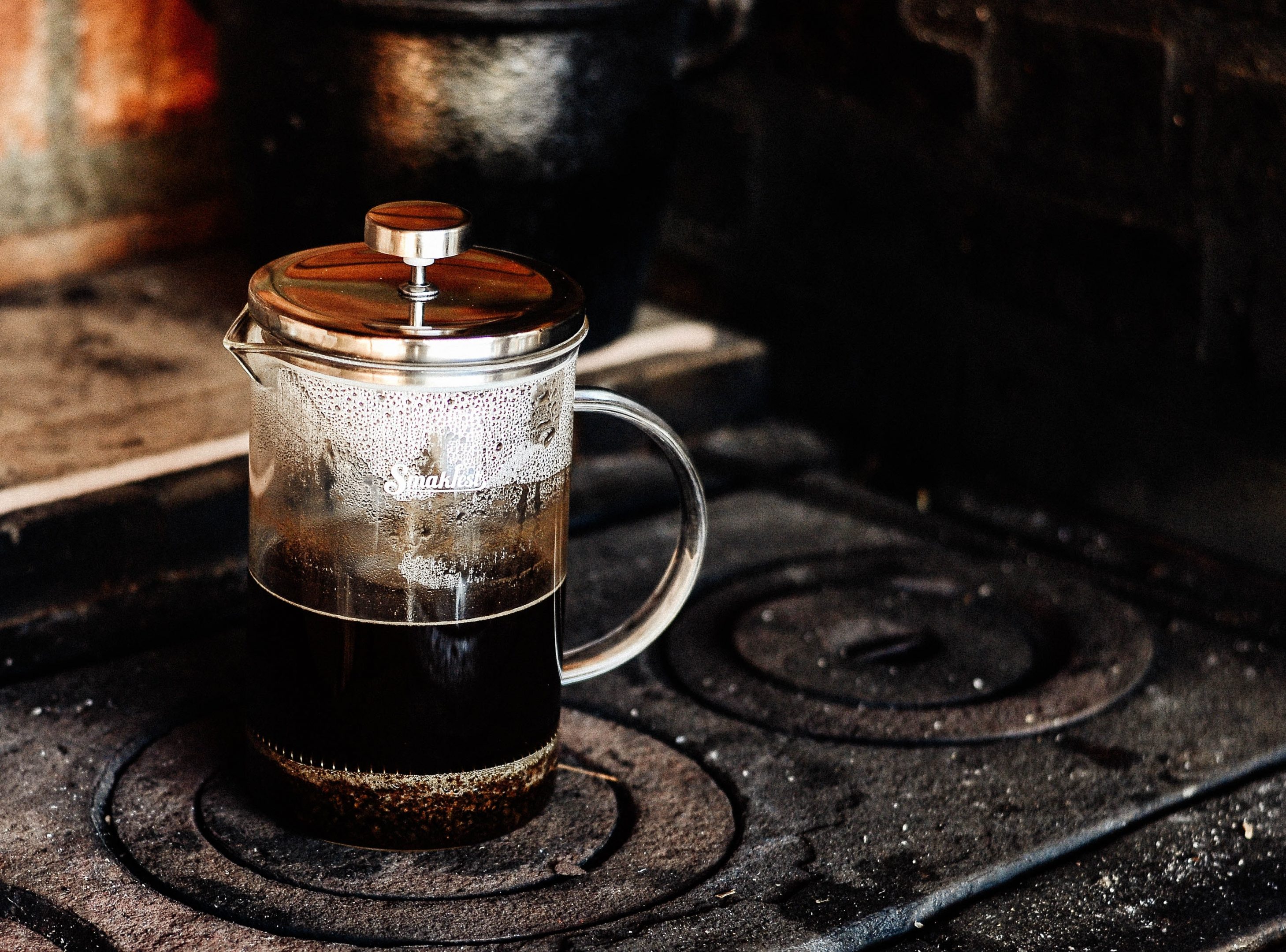
Glass presses are classic because you can see the brew. They are also easier to inspect and usually more affordable.
Stainless steel presses are harder to break and often insulated. They are useful if you brew outdoors, serve multiple cups, or want coffee to stay hot longer.
Ceramic and stoneware presses look great and hold heat well, but they need more careful handling.
3. Capacity
French press sizing can be confusing because some brands use small “cup” measurements. Check ounces or milliliters before buying.
| Household Need | Practical Size |
|---|---|
| One small cup | 12 to 17 ounces |
| One large mug or two small cups | 24 ounces |
| Two people | 32 to 34 ounces |
| Serving guests | 40 ounces or larger |
4. Cleanup
Look for a press that comes apart easily. You should be able to rinse the mesh and remove old coffee oils. If the filter is hard to disassemble, it will be harder to keep clean.
5. Replacement Parts
Filters, screens, and glass carafes can wear out or break. A press with available replacement parts is usually a better long-term buy than a cheap model that must be replaced entirely.
French Press Features Worth Paying For
- Double-wall insulation if you serve slowly
- Stainless steel body if you break glass often
- A comfortable handle
- A stable base
- A filter that can be cleaned or replaced
- Clear capacity markings
Features You Can Skip
Not every upgrade matters. Fancy packaging, oversized accessory kits, and unusual shapes do not automatically improve the cup. Spend first on durability, filter quality, and fresh coffee.
How to Make Any French Press Taste Better
The brewer matters, but technique matters more. Use a coarse grind, hot water around 195 F to 205 F, and a 4 minute steep. Press slowly and decant right away.
If your coffee tastes bitter, your grind may be too fine or the coffee may have sat too long on the grounds. If it tastes weak, use more coffee or grind slightly finer.
For a full brewing walkthrough, read our French press brew guide.
Best Coffee for French Press
French press emphasizes body, oils, and texture. Medium-dark and dark roasts usually perform well because the method brings out chocolate, caramel, and heavier roast notes.
Try:
- Bob and Weave Dark Blend for a rich daily cup
- Dark and Dangerous for a heavier dark roast
- Big Joe Blend for a balanced everyday brew
French Press Buying FAQ
Should I buy a cheap French press first?
If you are new to the method, a basic glass press is fine. Upgrade later if you want better heat retention, durability, or replacement parts.
Is an insulated French press worth it?
It is worth it if you brew more than one cup or serve coffee slowly. If you pour immediately into a mug, glass is usually enough.
Do expensive French presses taste better?
Not automatically. Better filters and heat retention can help, but fresh coffee, grind size, ratio, and brew time have a bigger effect.
Final Takeaway
Choose a French press that fits how you actually brew. Glass is simple and affordable. Stainless steel is durable and warm. Ceramic looks good and holds heat. Whatever you choose, pair it with fresh coffee and a coarse grind.