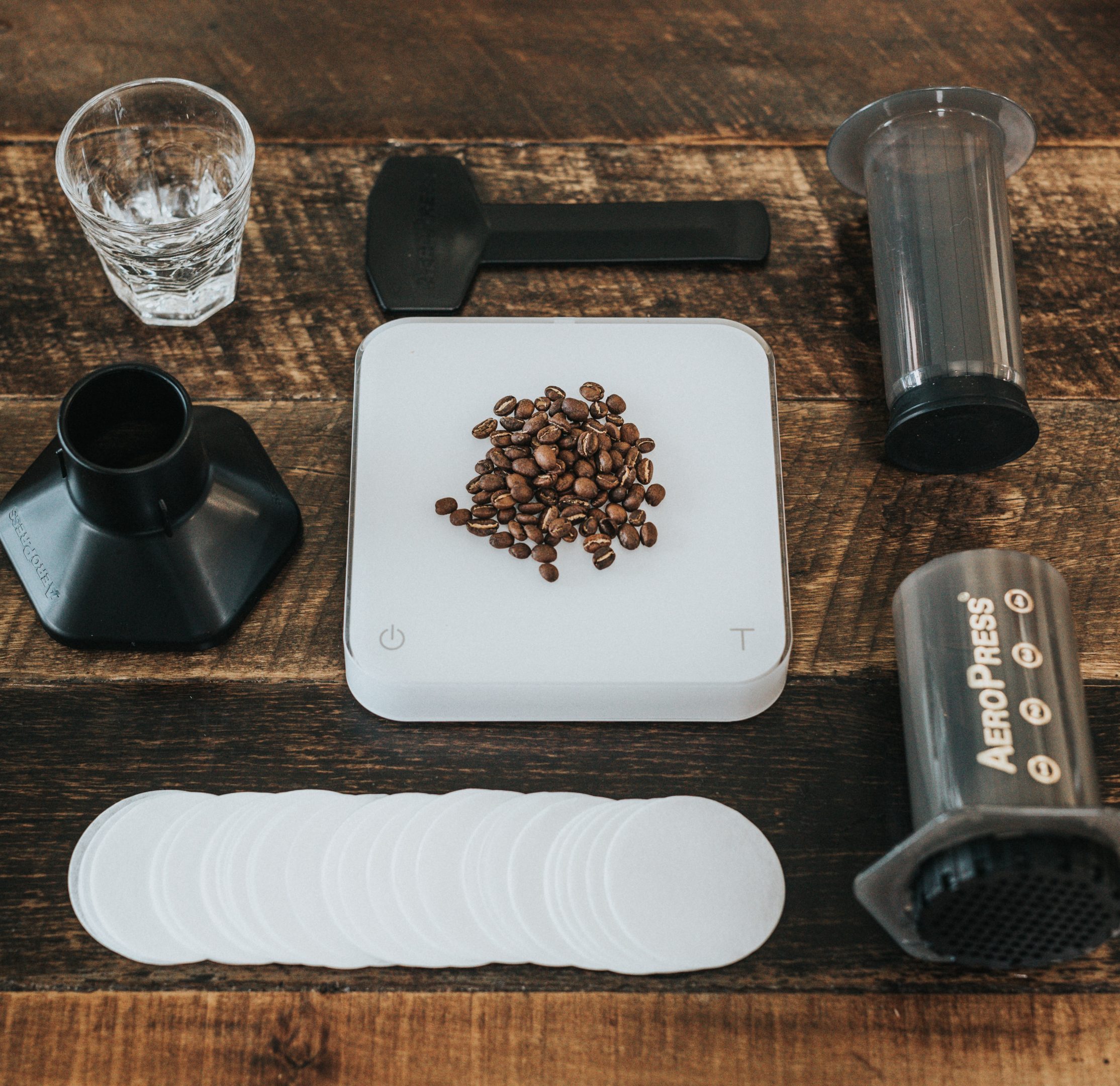
Most people treat the AeroPress like a toy. A plastic plunger. A party trick for camp trips. They brew one recipe — the inverted method, 1:16, two minutes — and call it mastery.
They’re wrong.
The World AeroPress Championship doesn’t hand out trophies for following the manual. The 2026 finals in Mexico City will crown someone who treats this plastic cylinder like a precision instrument. Someone who understands that every variable — temperature, agitation, pressure, time — is a lever. Pull the right ones in the right order and you get clarity that rivals a $3,000 pour-over setup. Pull them wrong and you get mud.
This isn’t about the inverted method anymore. That’s table stakes. This is about the techniques that separate the podium finishers from the spectators.
Before you can hack the AeroPress, you need to understand what’s actually happening inside that tube.
Immersion meets pressure. That’s the whole game. Unlike a V60 where gravity pulls water through a bed, or espresso where nine bars forces it through, the AeroPress sits in a weird middle ground. You steep. Then you press. The press creates pressure — typically 0.5 to 1.5 bars depending on your grind and force — which accelerates extraction in the final seconds.
The filter matters more than you think. Paper filters remove oils and fines. Metal filters let them through. A double paper filter catches more fines than a single. A metal filter with a paper on top gives you body with clarity. The 2023 champion used a custom-cut titanium filter. The 2024 winner used two Aesir papers. There’s no single answer — there’s only what works for your coffee.
Temperature is your sharpest knife. The AeroPress loses heat fast. Plastic doesn’t insulate. A 93°C pour drops to 85°C in thirty seconds. Champions preheat everything. Chamber. Plunger. Cup. Scale. They brew at 96°C for light roasts, 88°C for dark. They know that a 5°C swing changes extraction more than a full grind setting.
Championship-Level Techniques
1. The Temperature Profile Method
Most brewers pick one temperature. Champions use two.
The Protocol:
- Bloom phase (0:00–0:45): 96°C water, just enough to saturate (2× coffee weight). Aggressively swirl. This opens the coffee structure at peak thermal energy.
- Main phase (0:45–1:30): Top off with 88°C water. The temperature drop slows extraction right as the coffee hits peak solubility. You get the bright notes from the bloom, the sweetness from the main phase, none of the bitterness from sustained high heat.
- Press (1:30–2:00): Slow. Thirty seconds minimum. The pressure gradient extracts the final sugars without pulling tannins.
Why it works: Light roasts need heat to crack their structure. But sustained heat over-extracts the exterior before the interior catches up. The temperature step solves this.
Coffee that kills with this: Ethiopian Jab (light), any high-grown Kenyan, Gesha varieties.
2. Flow Control via Grind Gating
The AeroPress has no flow control valve. Your grind is the valve.
The Concept: Grind coarse enough that water passes too fast? You get under-extraction. Grind fine enough that the press stalls? You get over-extraction and a workout. The sweet spot is a grind where the press takes exactly 45–60 seconds with moderate, steady pressure.
The Calibration Routine:
- Pick a coffee. Dose 18g.
- Grind at your “normal” AeroPress setting.
- Brew standard inverted: 200g water, 1:30 steep, press.
- Time the press.
- Under 30 seconds → grind finer
- Over 75 seconds → grind coarser
- 45–60 seconds → lock it in
- Now change only the dose. 16g, 20g, 22g. Recalibrate grind for each. Write it down.
The Payoff: You now have a grind map for that coffee at every dose. No guessing. When you switch from 18g to 20g for a bigger cup, you already know the setting.
Pro tip: The 2022 champion (Tuomas Merikanto) used a bimodal grind — 70% at his calibrated setting, 30% one click finer. The fines create body. The coarse particles create clarity. The mix creates both.
3. The Double-Dip Agitation
Agitation isn’t binary. It’s not “stirred” or “not stirred.” It’s a spectrum of energy input, and the pros map it like a fight card.
Round 1 — The Bloom Swirl (0:00–0:15): Violent. You’re not mixing. You’re destroying dry pockets. Spin the chamber like you’re winding a watch. Thirty seconds of aggressive rotation. Every particle wet. No channels.
Round 2 — The Mid-Steep Pulse (1:00): One gentle stir. Two rotations. Just enough to resettle the bed after the bloom gases escape. No violence here — you’re not trying to extract, you’re preventing a crust from forming a barrier.
Round 3 — The Pre-Press Settle (1:25): Tap the chamber on the counter. Three firm taps. This drives fines to the bottom, away from the filter. Cleaner cup. Less sludge in the press.
The Mistake: Stirring constantly. Constant agitation = constant over-extraction of the surface layer. You want pulsed energy. Shock the system. Let it recover. Shock it again.
4. Pressure Profiling — Yes, On an AeroPress
You don’t have a pressure gauge. You have your palm. That’s enough.
The Three-Phase Press:
Phase 1 — The Feather (0–15 seconds): Barely touch the plunger. Let the weight of your hand do the work. 0.2–0.3 bars. This pulls the easy sugars — the ones that make the cup taste sweet and juicy.
Phase 2 — The Lean (15–35 seconds): Increase pressure steadily. Not hard. Steady. You’re targeting 0.8–1.0 bars. This extracts the middle — the acids, the fruit notes, the complexity.
Phase 3 — The Anchor (35–60 seconds): Hold maximum sustainable pressure. Don’t slam. Hold. The final 10–15 seconds are where the heavy compounds live. If you rush, you get astringency. If you hold, you get depth.
The Tell: If the press finishes in under 45 seconds total, your grind is too coarse. If you’re still pressing at 90 seconds, too fine. The 60-second press is your North Star.
5. The Bypass Protocol (For Competition Strength)
Championship recipes often target 1.3–1.4% TDS — stronger than most people drink. Then they bypass.
The Math: Brew at 1:12 ratio (18g coffee, 216g water). This hits ~1.35% TDS. Then add 84g hot water post-brew to land at 1:16 (your target drinking strength).
Why Not Just Brew at 1:16? Because extraction efficiency peaks at higher concentrations. The coffee extracts more completely when the slurry is stronger. The bypass dilutes after extraction, not during. You get higher extraction yield at the same final strength.
The Risk: Bypass amplifies flaws. If your extraction is uneven, bypass makes it obvious. This is why champions only bypass with dialed-in technique.
The Competition Recipe Framework
Every winning AeroPress recipe since 2018 follows this skeleton. The variables change. The structure doesn’t.
| Variable | Championship Range | Your Starting Point |
|---|---|---|
| Dose | 16–22g | 18g |
| Ratio | 1:10 – 1:14 (pre-bypass) | 1:12 |
| Bloom Temp | 94–98°C | 96°C |
| Main Temp | 85–92°C | 88°C |
| Bloom Time | 30–60s | 45s |
| Total Steep | 90–150s | 120s |
| Press Time | 45–75s | 60s |
| Filter | 1–3 papers, or metal + paper | 2 Aesir papers |
| Bypass | 0–40% of final weight | 25% |
Build Your Recipe in This Order:
- Lock dose and ratio — this sets your strength ceiling
- Calibrate grind for 60s press — this sets your extraction floor
- Dial temperature — light roast = hotter bloom, cooler main
- Tune agitation — more agitation = more extraction, less clarity
- Add bypass last — only when 1–4 are repeatable
Coffee-Specific Playbooks
Light Roast / High Density (Ethiopian Jab, Kenyan, Gesha)
- Dose: 20g
- Ratio: 1:11 (220g water)
- Bloom: 98°C / 45s / aggressive swirl
- Main: 90°C / top off to 220g
- Steep: 2:00 total
- Press: 60s three-phase
- Filter: 2 papers
- Bypass: 30g (final 1:14)
- Target: Floral clarity, tea-like body, explosive aromatics
Medium Roast / Balanced (Colombian Choke Hold, Guatemalan, Costa Rican)
- Dose: 18g
- Ratio: 1:12 (216g water)
- Bloom: 96°C / 45s / aggressive swirl
- Main: 88°C / top off
- Steep: 1:45 total
- Press: 55s three-phase
- Filter: 1 paper + 1 metal (body + clarity)
- Bypass: 25g (final 1:15)
- Target: Chocolate sweetness, stone fruit acidity, round body
Dark Roast / Low Density (Big Joe Blend, Dark & Dangerous, Sumatra)
- Dose: 16g
- Ratio: 1:13 (208g water)
- Bloom: 90°C / 30s / gentle stir only
- Main: 85°C / top off
- Steep: 1:15 total
- Press: 45s steady (no three-phase — dark roast extracts fast)
- Filter: 1 metal (oils = body)
- Bypass: None (drink at 1:13)
- Target: Deep sweetness, zero bite, heavy mouthfeel
The Gear That Actually Matters
Aesir Filters ($18/100) — Thinner than standard. Less paper taste. Faster flow. The championship standard for a reason.
Fellow Prismo ($25) — Metal filter with pressure-actuated valve. No drip-through during steep. Essential for inverted method. Changes the physics — you get true immersion.
Acaia Lunar Scale ($265) — 0.1g resolution, 0.5s response. You need to see the weight drop in real time during the press. Cheap scales lag. Lag loses championships.
Temperature-Controlled Kettle (Stagg EKG / Corvo EKG) — ±1°C accuracy. If you’re doing temperature profiling, you need precision. A stove-top kettle with a thermometer works. A non-temp-controlled electric kettle doesn’t.
What Doesn’t Matter:
- The AeroPress model (Original, Go, Clear, XL — all work)
- Fancy stands
- Custom tampers (you’re not tamping)
- “Competition” branded accessories
Your Training Camp
Don’t try all of this tomorrow. Pick one technique. Master it. Then add the next.
Week 1: Calibrate your grind for a 60-second press on your daily coffee. Write down the setting. Hit it three days in a row.
Week 2: Add the temperature profile. Bloom hot, main cooler. Same coffee. Taste the difference.
Week 3: Map the agitation. Bloom swirl, mid-steep pulse, pre-press settle. Same coffee. Taste the difference.
Week 4: Build your full recipe. Lock dose, ratio, grind, temps, agitation, press profile. Brew it five times. If the fifth cup tastes identical to the first, you own it.
Week 5: Switch coffees. Apply the framework. Adjust only what the coffee demands.
The Final Bell
The AeroPress is the most honest brewer on your counter. No pump to hide behind. No gravity to blame. No nine bars of pressure to mask your mistakes. It’s just you, the coffee, and the press.
That’s why the championship matters. It strips away the gear crutches. The winner isn’t the person with the most expensive setup. It’s the person who understands extraction deeply enough to manipulate it with a plastic tube and a rubber plunger.
Mexico City is waiting. Your technique is training.
Next time you pick up that AeroPress, ask yourself: Am I following a recipe, or am I fighting for extraction?
The cup doesn’t lie. The judges don’t either.
Throw the combination. Win the round. Drink the prize.
☕ Fight Club Coffee Company — Brew like you mean it.